
From M&A to Development Finance: The Three Phases Where Deals Are Won or Lost
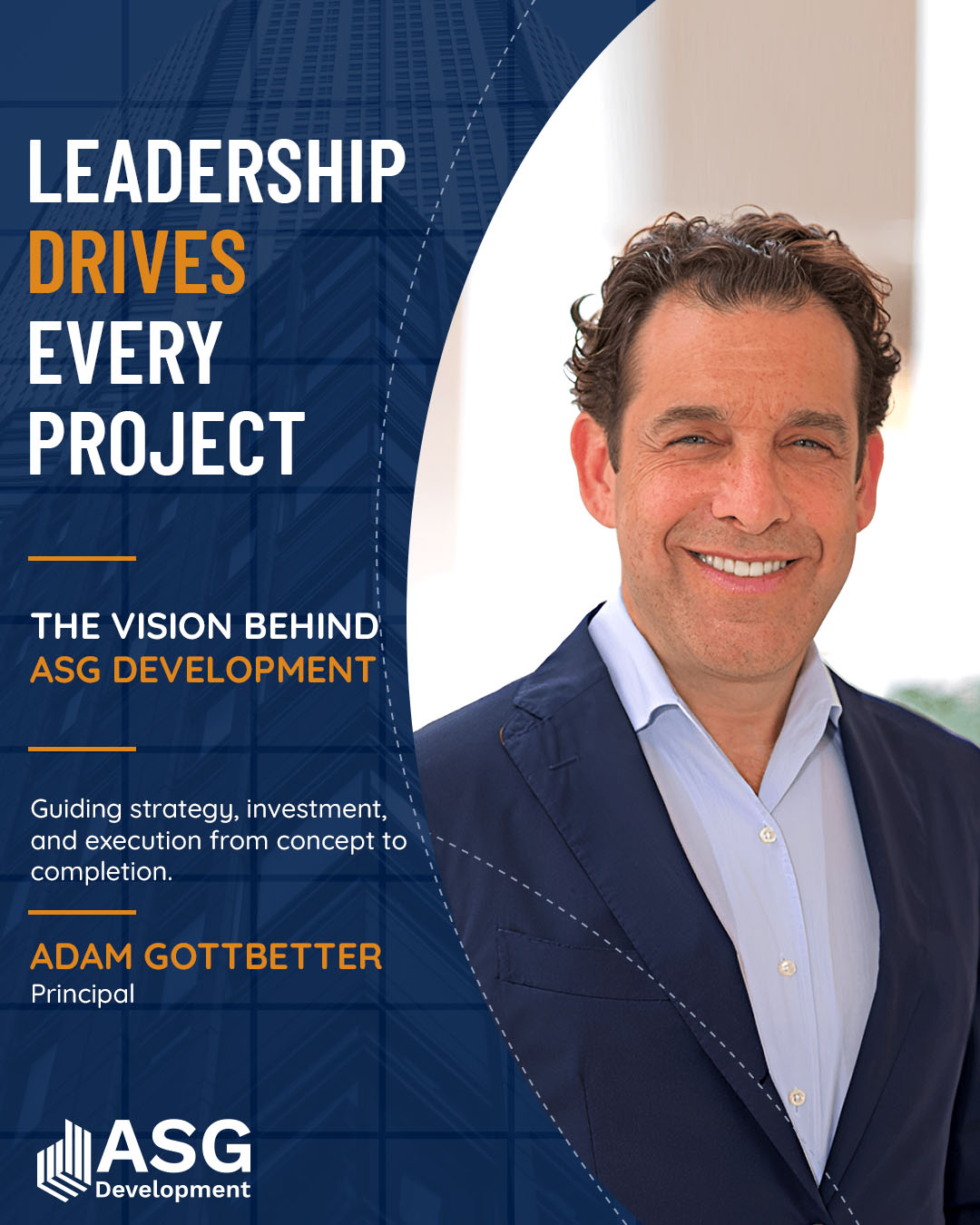
Real estate development is a financing problem that happens to produce a building at the end. The building is the output. The deal structure that makes it possible is where the actual work lives — and where most projects succeed or fail long before the first shovel goes in. Adam Gottbetter, Principal of ASG Development, came to development from corporate securities law and merchant banking: three decades of sourcing, structuring, and closing transactions across industries. That background does not make someone a better architect. It means going in with a framework for the part of development that most often determines whether a project survives.
What M&A work teaches
Corporate deal work forces systematic thinking about risk allocation: who absorbs which downside, who captures which upside, when each party’s exposure shifts, and what conditions let a deal unwind. Enough transactions build an intuition for where a deal will break and how to prevent it in advance. In development, those instincts apply directly — a project is a multi-year financing exercise with a physical asset attached, involving construction debt, permanent financing, equity structures, partnership agreements, and a long tail of approvals.
Phase 1 — Construction debt
Funds the build at a higher cost and shorter term. Construction lenders care about completion risk and budget discipline above all. Experienced developers with successful track records typically do not see execution risk as great, whereas lenders and non-developers attribute an outsized amount of risk to completion because they cannot finish a building. Helping to level this imbalance of risk is a critical challenge in debt financing.
Phase 2 — Bridge financing
Covers the gap between completion and stabilization. Bridge lenders weigh lease-up pace and the credibility of the path to permanent capital.
Phase 3 — Permanent financing or sale
Closes out the development phase. Permanent lenders and buyers evaluate stabilized cash flow and durable value. Each transition is a pressure point, and the developer who can structure for all three sets of concerns at once — and speak credibly to each kind of capital — has a real edge over one who treats capital as a single undifferentiated resource.
Adam served in a senior finance and development role at Green Park Management, overseeing debt and equity from construction through permanent financing across the firm’s South Florida hotel portfolio. That portfolio included the Aloft by Marriott Fort Lauderdale Airport, which opened in November 2023 and was sold in March 2026.
Where deals actually break: the equity
The financing discussed publicly is usually the debt. The equity structure is where the real decisions live: who carries the project before the first loan closes, how profit splits between operating and capital partners, and what the waterfall looks like when a project underperforms. In development, these often get answered by habit or last deal’s template — which is why partnerships fracture when trouble hits. Getting the equity right from the start with M&A-grade rigor is one of the least visible yet most durable advantages in any project.
Get in Touch ASG Development sources, structures, and closes real estate transactions across South Florida, with a focus on development finance and select-service hospitality. Visit ASGDevelopment.com.
Off-Market vs. Auction: A Conversation on Deal Sourcing
Auctions get the seller the best price. Why would a buyer avoid them?
That’s exactly the reason. An auction is built to extract the highest price anyone will pay. Win one, and by definition, you’ve paid more than every other bidder thought it was worth. Sometimes that’s justified by better information. More often, it’s just a more aggressive assumption about rent growth or exit cap rates — and that’s what produces the write-downs three years later.
So what does “off-market” actually mean? Secret deals?
No, and that’s the common misread. Off-market just means the deal closed before the seller ran a formal competitive process. You got there through relationships and presence — you were the call someone made while still thinking about selling, not after they’d hired a broker to run an auction.
How does a buyer get into that position?
Two things, and neither is fast: a reputation for actually closing, and enough depth in one specific market that brokers and owners think of you first. Both compounds over the years. There’s no shortcut you can buy.
Are auctions ever the right call?
Sure — for core assets in transparent markets where everyone has the same information, the auction prices it efficiently. Bid what it’s worth to you and be willing to lose. The off-market edge matters for assets with complexity, thin price discovery, or a seller who values speed and certainty over the last dollar.
Get in Touch If you’re evaluating a South Florida opportunity and want a counterpart who brings M&A discipline to sourcing and structure, visit ASGDevelopment.com.
The Hidden Cost of Moving Too Fast: A Due-Diligence Checklist
The feeling that a good deal is slipping away is one of the most reliably exploited levers in any negotiation. It pushes people to skip steps. The cost of those skipped steps stays invisible until the deal has closed and the problem has surfaced — by which point it costs more than the time saved. Before you let urgency set the pace, run the checklist. I always ask myself, “Why am I so lucky?” when considering a deal.
What due diligence is actually for
It’s not a box-ticking sequence — financial review, legal review, environmental, then close. Its purpose is to surface what a counterpart hasn’t told you: not necessarily through dishonesty, but because they don’t know what you need, or the deal gave them no incentive to volunteer it. Vcheck Global was built on exactly this premise — serving the funds, lenders, and banks that need to understand the people behind the deals they finance. The financial statements tell one story; the background tells another. Only one usually gets examined with rigor before the term sheet is signed.
Run this before you sign
- Pull court records on the seller for prior disputes with buyers — often three minutes of searching.
- Check the contractor for a documented pattern of cost overruns and litigation, not just a reference call.
- Trace the operating partner’s prior fund relationships — the ones references won’t volunteer but all are aware of.
- Separate the risks that could kill the deal or impair the return from everything else. The rest is noise.
Speed and discipline are not opposites
The argument for rushing is usually framed as a contrast between speed and thoroughness. That’s a false choice. A focused process, run by people who know what they’re looking for, is faster than a diffuse one — because it isn’t trying to be comprehensive for its own sake. The deals that blow up post-close almost always had identifiable warning signs beforehand. Nobody looked because the deal had momentum, and the window felt like it was closing. That feeling is almost always manufactured. The asset will still be there next week — and so will the problems, if you don’t look for them now.
Get in Touch If you’re evaluating a South Florida real estate or business opportunity and want a partner who takes diligence seriously from day one, visit ASGDevelopment.com.